Almost every week now, someone in your life needs a signed PDF back. HR wants your offer letter signed. Your bank wants a KYC update. A landlord wants the rental agreement. Your CA needs a Form 15G signature. The traditional flow — print, sign, scan, upload — takes 20 minutes and produces a 4 MB scan that half the portals will reject for being too big.
This is a proper walk-through of the modern alternative: sign the PDF directly in your browser, keep the file small and searchable, and — critically for a document containing your PAN and Aadhaar — never send it to a stranger's server for signing.
The 60-second flow
Open Bluebird's Sign PDF tool. Drop in the PDF the bank or HR sent you. You'll see the full document rendered in the tab, page by page, exactly as it will look when signed.
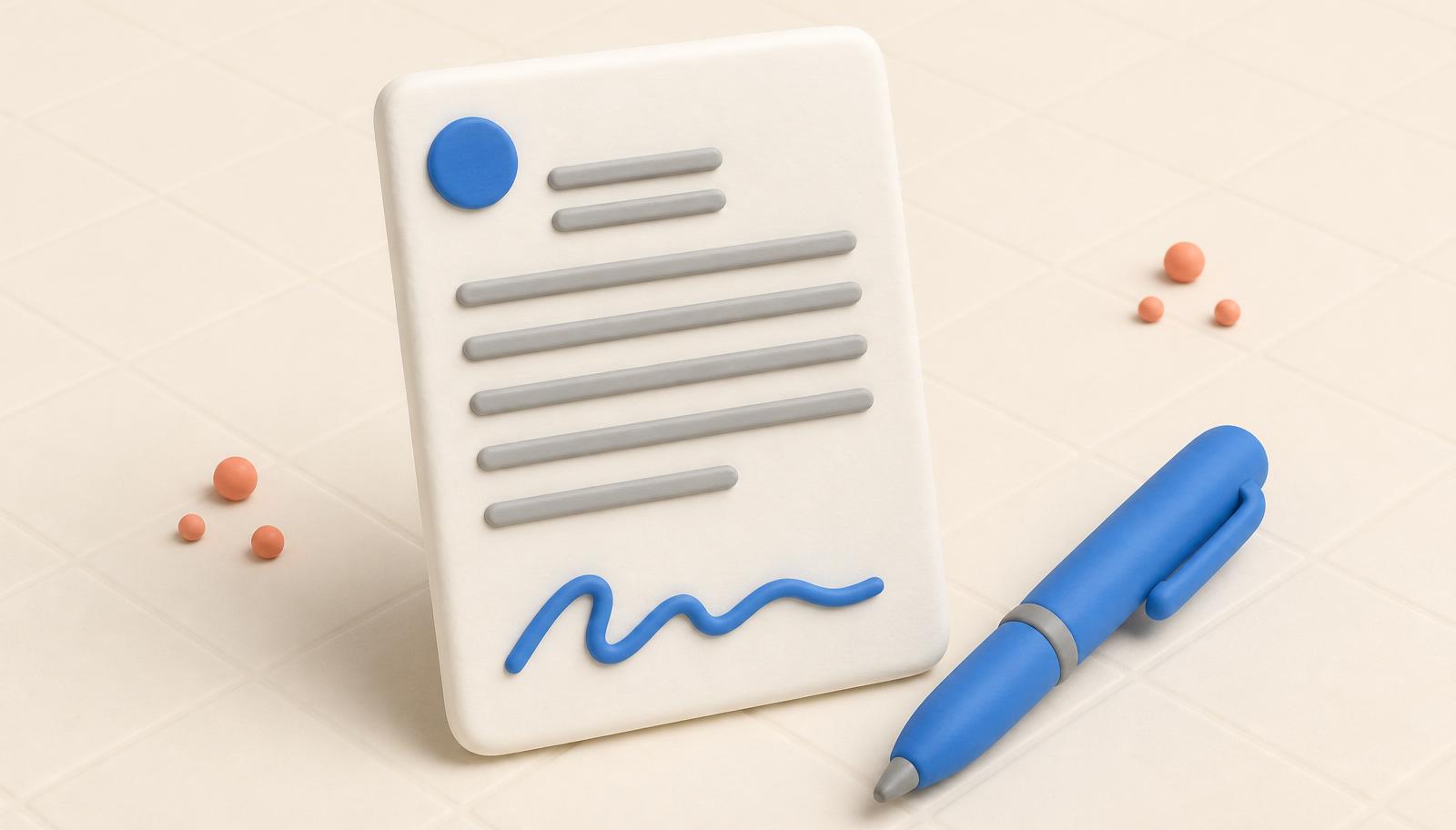
Choose how you want to sign. There are three ways and each has its place. Draw it with your mouse, trackpad or touchscreen — this is fine for a stylus but usually looks jittery on a laptop trackpad. Type your name in a handwritten-style font — fine for informal internal documents, obviously not a real signature. Upload a photo of your paper signature — the most common choice, and the one that looks most like the signature the bank has on file.
Drag your signature onto the signature box. Resize with the corner handles until it fits. If the form has multiple signature spots — initial each page, sign the last page — repeat for each. Click Save. Your browser hands you back a signed PDF that opens correctly in every reader.
Which signature method to actually use
For bank KYC and government forms, upload a photo of your paper signature. Banks compare your uploaded signature to the specimen on file, and a trackpad squiggle looks nothing like your real one. Take the photo on a clean white sheet in daylight, and Bluebird's tool will auto-remove the white background so it drops cleanly onto the PDF.
For offer letters, NDAs and rental agreements, either photo or drawn works. Nobody at HR is comparing signatures — they just need something identifiable.
For internal work docs, the typed handwritten font is fine and honestly faster. Nobody sane treats a typed signature as legal proof of anything; that's what the underlying agreement is for.
Avoid one anti-pattern: don't use a screenshot of your signature from a previous PDF. Screenshots pick up JPEG artefacts and re-scanning them looks bad. Use the original photo, once, and keep it saved somewhere safe.

Why we do this in the browser and not on a server
Bank forms, KYC updates and offer letters are among the most sensitive PDFs in your inbox. A signed 15G contains your PAN and address. A KYC form has your Aadhaar number, phone, DOB and parent's name. An offer letter has your salary. Uploading these to a random "free online sign PDF" site is genuinely risky, and the risk is not paranoia — every year at least one of these tools ends up in a breach dump.
Bluebird's signing runs on pdf-lib inside your browser. The PDF is loaded into an ArrayBuffer in memory, the signature is stamped as a transparent PNG in the correct page coordinates, and the modified PDF is handed back to you as a Blob. There is no account, no upload, no email confirmation, no server-side render, no watermark on the output. Open your browser's Network tab during signing and you will see zero requests to us — the same test the security-minded people in your life have been quietly running.
There's a nice side-effect. The tool works offline. Load the page once with a connection, then turn Wi-Fi off. Everything still works. The whole app is cached by our service worker, so a signed PDF can happen on a plane.

Keeping the signed file small enough to upload
Banks and HR portals usually cap uploads at 2–5 MB. Your signed PDF might exceed that if the original was a heavy scan. In that case, run the signed PDF through Bluebird's PDF Compressor after signing — compress to a specific target (500 KB or 1 MB works for most portals) and you're done.
Do these two in this order: sign first, compress second. Compressing first is technically fine, but signing after compression sometimes causes the signature to render at the compressed page's scale rather than the original, and the tool has to rasterise the whole page to stamp it, which loses selectable text. Sign-then-compress preserves both.
When you actually need Aadhaar e-Sign or DSC (and when you don't)
For a legally binding e-signature in India under Section 3A of the IT Act — a share purchase agreement, a court filing, an income-tax return, a company incorporation — you need Aadhaar e-Sign (OTP-based, via NSDL/eMudhra) or a Class-3 Digital Signature Certificate issued by a licensed CA. Bluebird's drawn or photo signature is not a substitute for those, and we won't pretend otherwise.
For everything else — bank KYC, HR forms, rental agreements, offer letters, most NDAs, most vendor onboarding — a drawn or photographed signature on a PDF is exactly what the counterparty is asking for. This is the 95% case, and it's the case Bluebird's tool solves without asking you to install anything, sign up for anything, or upload a document that has your salary in it.